
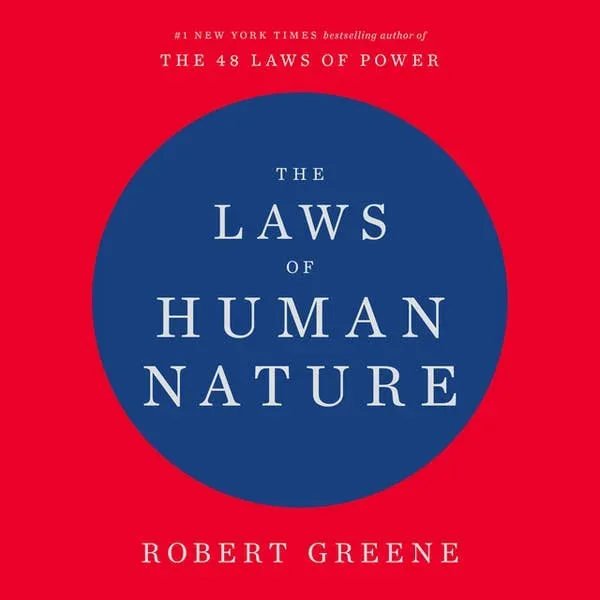
I started Robert Greene's "The Laws of Human Nature" this week. I'm four pages in, so this isn't a review — it's a confession about why I picked it up.
In every project I've worked on — telecom deployments, vendor coordination, site crews — the technology was never the hard part. Fiber splices, designs, schedules: those behave predictably. People don't.
A crew lead who won't hear bad news. A vendor who nods yes and delivers no. A stakeholder who changes the scope and then denies changing it. I've spent years learning the technical side of project work, and somewhere along the way I realized the technical side was the easy half.
Greene's opening argument is simple and uncomfortable: we are not the rational creatures we pretend to be. We're emotional first, rational second — and the people who understand that have an edge over those who don't. The book lays out eighteen "laws," patterns of human behavior that show up everywhere: irrationality, narcissism, envy, aggression, the masks people wear.
I'm reading it as someone mid-pivot — from field telecom into project coordination — because the job I'm moving toward is, at its core, a people job. Schedules and budgets matter, but projects are delivered by humans, through humans, in spite of humans.
Four pages in, one idea already stuck: the greatest leverage comes from understanding people's motives — starting with your own. Most of us spend our energy trying to change others. Greene suggests starting with the person in the mirror.
I'll report back when I've actually finished it. For now, the lesson from page four is enough: master yourself first. The Gantt charts can wait.
Join the conversation.
What connects with your experience? Share a perspective or a question.
Loading discussion…