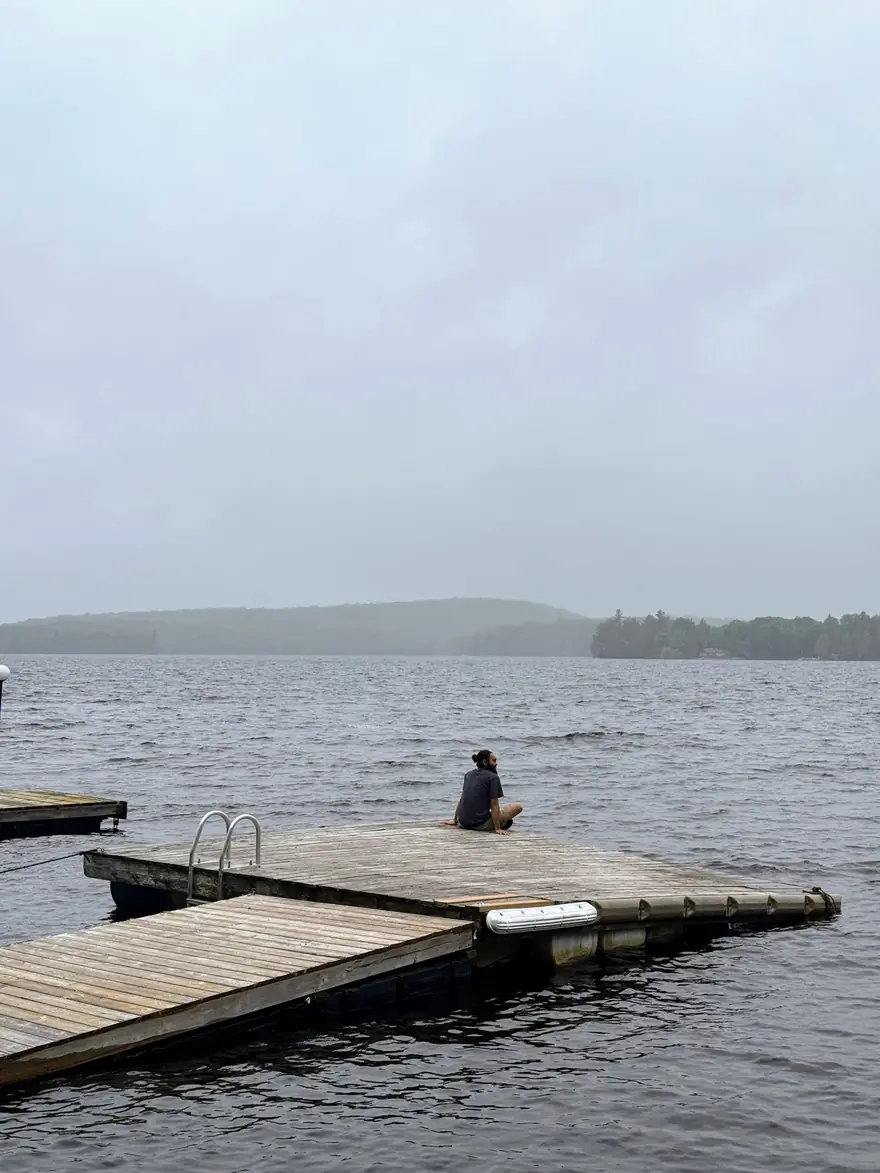

I landed in Winnipeg on September 21st for a work deployment expected to last months. Everything about it is temporary — the Airbnb changes, the sites move across the province, the crew isn't home. The first week is all logistics. After that, the real challenge isn't the work. It's the hours nobody schedules.
Field days run till six or seven. Then the evening is yours, and that's the problem — it's yours and nobody else's. At home, routine is invisible. It's built into the place: the same rooms, the same people, the same rhythms. You don't think about it because you don't have to build it. Away from home, you do. Every fixed point in your day has to be deliberately placed, or the evening dissolves into scrolling and the morning starts already behind.
So I built a few. Rehras Sahib at sunset — same time every day, whatever Airbnb I'm in, whatever the site threw at us. An hour of study in the evening. A book before sleep. None of it is impressive. That's the point. They're small, repeatable, and they don't depend on location, mood, or company. On the days the work runs long and I'm running on fumes, the routine is what keeps the day from being a total write-off.
Same sun, a different sky —
the evening finds me anyway.
A room that isn't mine,
a prayer that is.
The road keeps changing.
I keep the hour.
Here's what I've taken from it: self-management is a project like any other. A project plan is really just a routine a team borrows until it becomes theirs — milestones instead of sunsets, standups instead of evening study. The discipline is the same. Nobody's watching either way. The plan only works if you work it when it's inconvenient, which is most days.
Months from now this deployment ends and I go home. The sites, the Airbnbs, the long drives — all of that stays here. The routine comes with me. That's the thing about building your own structure: unlike the place, you get to keep it.
Join the conversation.
What connects with your experience? Share a perspective or a question.
Loading discussion…